
Wuzhou Guilinggao: The Herbal Jelly That Isn't What You Think
A personal story and factual guide to Wuzhou Guilinggao: what it is, why traditional versions are amber rather than black, whether it really contains turtle, and how to eat it.
It was always served in a heavy stainless-steel basin.
Not a ceramic bowl, not a delicate dessert plate, but the kind of wide, flat-bottomed steel basin with concentric rings etched into the base—a staple of southern Chinese kitchens. My mother would set it down on a low, red plastic stool. The stool was short enough that when I leaned over as a child, the surface of the dark jelly rested right at my chest level.
I would often just sit there staring at it, watching how a pot of scalding, dark liquid quieted down little by little—growing calm, settling, until it stopped moving altogether.
Strictly speaking, it wasn’t actually black.
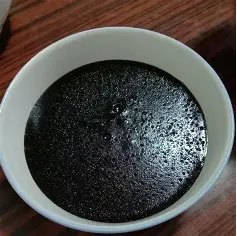
If you buy commercial herbal jelly off a supermarket shelf today, it is as black as polished ink. But the batch my mother poured into that steel basin was a deep, translucent amber—like tea leaves steeped for so long they begin to look like liquid resin.
The magic happened at the edges. When you ran a thin knife along the inside of the basin and sliced off a block, the sliced edges caught the sunlight. A thin layer of amber light passed right through, like a slab of heavy, flattened glass. When you held a bowl of it in your hands, it trembled.
That trembling was distinct. It didn’t bounce like commercial gelatin. It possessed a heavier, denser weight—a slow wave that looked as if it were about to collapse under its own gravity, yet somehow held its form.
Watching those trembling cubes, daydreaming of the sweetness and coolness to come, I would get hungry.
Is Guilinggao Made from Real Turtles? Debunking the Myth
For a long time, I never questioned the name. To me, Guilinggao (龟苓膏) was just a single, unbroken word—like “pineapple cake” or “sweetheart pastry.” I never thought to break it apart. I never stopped to realize that Gui meant turtle, and Ling meant Poria (a medicinal fungus).
And I certainly never expected that one day, the turtle would be pushed to the very bottom of the ingredient list.
| Feature | Traditional Wuzhou Formula | Modern Commercial Version |
|---|---|---|
| Primary Gel Agent | Turtle Plastron Collagen | Grass Jelly / Starch |
| Key Herbal Base | Tu Fuling (Smilax glabra) | Sugar, Licorice, Dandelion |
| Color | Translucent Amber-Brown | Opaque Jet Black |
| Texture | Dense, slow heavy tremble | Firm, bouncy, elastic |
| Taste Profile | Bittersweet with herbal depth | Mildly sweet, light herbal |
| Dietary Fit | Non-Vegan (Animal Collagen) | Frequently Vegan-Friendly |
Historically, authentic Wuzhou Guilinggao gained its natural firm texture from turtle plastron (the under-shell), simmered alongside native herbs like Tu Fuling for over fifteen hours. The collagen from the shell produced a light golden hue, while the herbs added an earthy brown shade.
Today, if you turn over a tin of mass-produced herbal jelly in an Asian supermarket, you will likely see Mesona chinensis (Grass Jelly extract) at the top of the label, with turtle powder relegated to less than 1%, or omitted entirely.
Grass jelly makes it black. It makes it cheaper. It allows it to be mass-produced in factory vats, packed into aluminum tins, and shipped ten thousand miles across the globe.
It doesn’t render the dessert “bad.” It simply makes it something else.
Guilinggao vs. Grass Jelly: What’s the Difference?
When people taste commercial Guilinggao for the first time, they often ask: “How is this any different from Grass Jelly?”
The short answer? In modern commercial forms, they are almost cousins.
- Grass Jelly (烧仙草): Derived entirely from the leaves and stems of the mint-family plant Mesona chinensis. It is cooling, light, inherently vegan, and carries a gentle, leafy aroma.
- Guilinggao (龟苓膏): Grounded in Traditional Chinese Medicine (TCM). It relies on a blend of bitter, heat-clearing roots—Smilax, Licorice, Dandelion, and Honeysuckle.
When made authentically, Guilinggao is not merely a sweet snack; it is a functional tonic meant to balance “internal heat” (上火) during hot summers. It carries an unapologetic bitterness that gives way to a long, clean, herbal sweetness in the back of the throat.
How to Eat Guilinggao: Traditional & Modern Pairings
If you are trying authentic or craft Guilinggao for the first time, eating it plain can be an intense experience due to its bitter undertones. Here is how to enjoy it:
1. The Classic Wuzhou Style
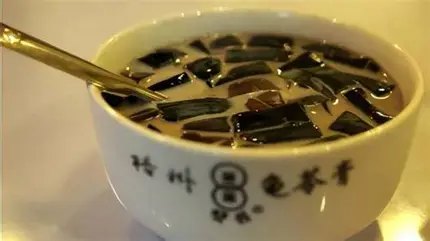
Slice the jelly into 1-inch cubes. Drizzle generously with raw mountain honey or condensed milk. The richness of the dairy or the floral sweetness of the honey cuts straight through the herbal bitterness, leaving a crisp, refreshing finish.
2. The Modern “Low-Calorie Boba” Twist
Cube the herbal jelly finely and drop it into a glass of cold oat milk or a hot milk tea base. Because the jelly retains its structural integrity without melting, it serves as a chewy, herbal, low-sugar alternative to tapioca pearls.
Taste Wuzhou Craft: Want to experience the authentic bittersweet balance at home? The Wuzhou Direct Starter Kit pairs slow-brewed herbal jelly pots with artisanal raw honey packets.
Two Kinds of Heritage: Knowing What You Pay For
If you walk into a traditional shop in Wuzhou today, you will find two distinct varieties sitting side by side in the glass display fridge:
- The Consumer Blend: Soft, sweet, mild, and approachable. Formulated for casual snacking and international export.
- The Traditional Brew: Darker, firmer, distinctly bitter, and herbal. Crafted for locals who still seek the functional cooling properties of the original recipe.
Neither version is “wrong.” But knowing the difference allows you to make a conscious choice.
The next time you pick up a container of herbal jelly from a market shelf, take a brief moment to flip it over. Look at the ingredient list. See where the herbs sit. See if the shell is still there.
It might be at the bottom. It might be gone altogether. But when you pause to look, you stop consuming blindly—and start tasting the history behind what you drink.
Turtle is turtle, and ling is ling. Today, more than a thousand kilometres from home, both have all but disappeared from my life—but the memory endures.
Frequently Asked Questions (FAQ)
Is Guilinggao vegan-friendly?
Traditional Guilinggao contains collagen extracted from turtle plastron and is not vegan. However, many modern commercial versions use plant-based starches or grass jelly extracts as their primary gelling agents. Always check the ingredient label for animal derivatives.
What does Guilinggao taste like?
Guilinggao has a firm, jelly-like texture with a prominent earthy, herbal bitterness. It is rarely eaten plain; it is traditionally served with honey, simple syrup, or condensed milk to balance its deep flavor profile.
Why is Guilinggao considered good for health in TCM?
In Traditional Chinese Medicine, Guilinggao is prized for its ability to clear internal heat (清热解毒) and nourish the skin. It is traditionally consumed during warm weather or after eating fried, spicy foods to restore internal balance.